
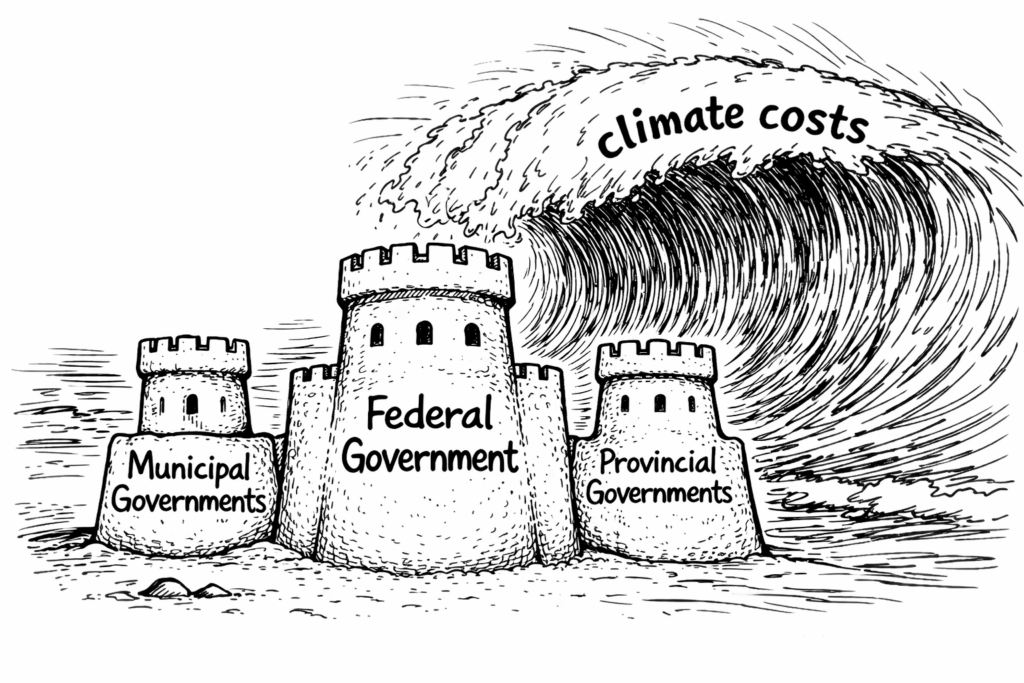
The risks associated with climate change are making all British Columbians less safe and driving up taxes and the cost of living. Speaking to a recent City of Victoria motion about an option to help pay for these costs Councillor Jeremy Caradonna explained:
“[T]he impacts of climate change are affecting our roads, they’re affecting our underground utilities, they’re affecting our retaining walls and in fact when we had a conversation with the Director of Finance about why taxes have been going up … one of the principal reasons is climate change. … Climate change [is] about financial well-being.”
The motion was a direct response to Victoria residents calling on the City to join the Sue Big Oil campaign, which asks local governments to work together to bring a class action lawsuit to recover a fair share of municipal climate costs from global fossil fuel companies. However, Victoria’s motion asks BC local governments to call on the Province of BC to take the lead in that lawsuit. While a good first step, Victoria needs to act too.
What a climate cost recovery lawsuit is and isn’t
The idea behind a class action is straightforward: Exxon Mobil, Shell, Chevron and other global fossil fuel companies have profited massively for decades selling the oil, gas and coal that cause climate change. Their own scientists told them, decades ago, that their products would cause harm to communities around the world, and rather than developing clean alternatives (some of which they held patents on), they chose to invest in misinformation campaigns and false solutions so that people would keep buying their products.
As with tobacco and opioids, they chose short-term profits and gambled that someone else would pay. As a result, taxpayers have been paying 100% of the costs through insurance premiums, tax increases, and in some cases, our lives.
This lawsuit isn’t about arbitrarily punishing fossil fuel companies. It’s about protecting our communities from rising costs while holding those companies accountable for their disproportionately large role in the climate crisis. Holding big polluters financially accountable for the consequences of misinformation campaigns and for putting their profits ahead of our future is only fair.
Yes, the Province should act, but municipalities can’t afford to wait
It is true that the Province of British Columbia should be involved in suing fossil fuel companies. The province’s taxpayers are picking up the bill for fighting wildfires, rebuilding communities and highways after climate disasters and upgrading public infrastructure to withstand future weather conditions. In the United States, California and ten other states are suing fossil fuel companies to protect their taxpayers. Provincial leadership in BC would be welcome.
However, BC’s government has so far shown more interest in subsidizing and expanding the fossil fuel industry than in holding it accountable.
Councillor Caradonna also suggested that Victoria could not act without provincial leadership. That claim undermines the 12 BC municipalities that are already working to file a class action lawsuit, as well as the dozens of local governments around the world that have filed lawsuits against global fossil fuel companies.
Municipalities like Victoria have both the power and the obligation to protect their residents from climate costs.
Why a municipal class action makes sense in BC
A class action lawsuit is a fiscally responsible step for elected officials who are already spending taxpayer dollars to keep communities safe from climate change. Every level of government has a responsibility to seek to recover its climate costs, rather than passing them on entirely to taxpayers. This should not be a game of bureaucratic “pass-the-buck” between local and provincial governments.
British Columbia’s class action rules are uniquely suited to this kind of claim. By proceeding as a class action:
- Legal costs are shared among participating municipalities
- Key rulings from the court and (hopefully) a settlement can be reached efficiently
- The losing party would not be required to pay the other side’s legal fees, which reduces financial risks to the local governments named in the lawsuit
- Not all local governments supporting the case need to be named
This structure allows municipalities of all sizes to participate without exposing any single community to disproportionate costs.
Local leadership is essential
Victoria can hope that the province will play a leadership role. But even if that does not occur, a joint lawsuit by local governments – which own and maintain 60% of public infrastructure – remains essential.
Like View Royal, Cumberland, Burnaby, and many other municipalities across BC, Victoria and other municipalities joining this effort would be a huge step toward protecting residents and ensuring a climate-safe and affordable future.
Top photo by Jeremy Bishop on Unsplash