If you’re a homeowner in Canada, you’ve probably noticed your insurance bills creeping up. Depending on where you live, you may have seen a dramatic jump.
Premiums in Kamloops, B.C., almost doubled in two years, according to a survey by mychoice.ca, an online service that compares insurance rates.
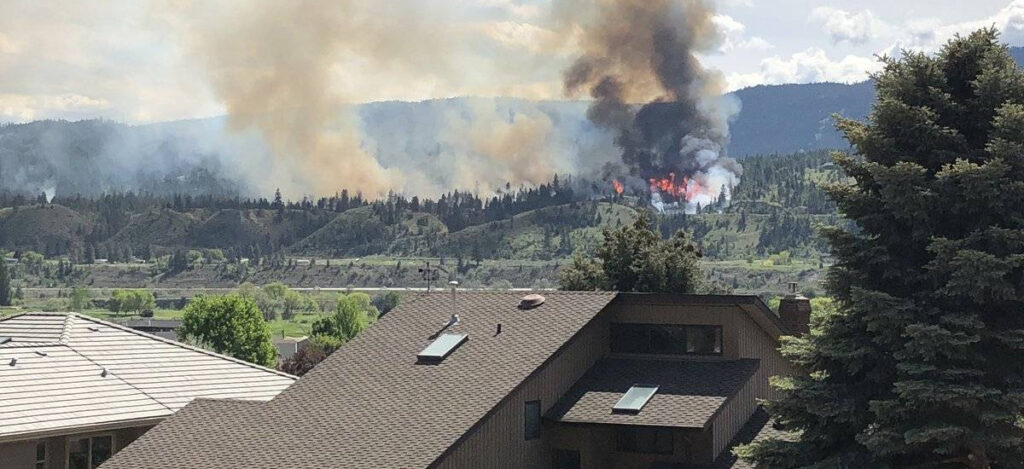
The interior city is surrounded by areas that have been hard-hit by devastating summer wildfires in recent years.
The insurance industry and experts are sounding the alarm. Craig Stewart, the VP of Climate Change and Federal Issues of the Insurance Bureau of Canada, said in January 2025 that absent massive investments in climate adaptation, “we should all get ready to live in an uninsurable country a decade from now.”
Similarly, Kiera Taylor, a senior analyst with Investors for Paris Compliance, has conducted research that concludes Canada’s insurance industry is doomed unless it can recoup some of its rising payouts caused by increasing floods, fires and extreme weather.
Writing in a Vancouver Sun opinion piece in December, Taylor said her research shows average home-insurance premiums have risen about 45 per cent over the past six years across Canada.
Those rising costs don’t include homeowners who can’t get insurance because they live in areas at high risk of floods or wildfire. The Insurance Bureau of Canada noted in 2025 that the skyrocketing payouts companies face due to climate-related disasters will make insurance not only less affordable, but in some cases not available at all.
Taylor says insurers should try to get their money back by taking fossil fuel companies to court and citizens can do the same through class-action lawsuits. The scientific evidence is getting stronger to support these cases, she adds.
Yet Taylor told Sue Big Oil in an email that insurers have so far been reluctant to try to recover their losses from polluters, with some saying they’ve never encountered the idea before.
“We should all get ready to live in an uninsurable country a decade from now.”
Craig Stewart, Insurance Bureau of Canada
And it’s not just the insurance companies on the hook. Governments end up paying for uninsured damages after catastrophic floods, fires and storms while spending more on wildfire prevention and control.
“Climate damages are thereby being socialized as the polluting companies responsible for driving those damages continue to externalize their costs.”
“As long as the costs of climate damages continue to be shouldered by homeowners and taxpayers, legal action to recover those costs from major polluters becomes not just possible, but inevitable,” writes Taylor.
Insurance and climate in court
In the U.S., lawyers and insurance analysts alike are linking out-of-control insurance costs with the fossil fuel economy.
Two homeowners who have seen their insurance bills double due to increased risk from climate change launched a recent class action lawsuit in Washington State.
They’re represented by lawyer Steve Berman who was a special assistant attorney general for 13 states that formerly took on Big Tobacco. His firm, Hagens Berman, plans to use a similar strategy against a group of oil giants including Chevron, Exxon and BP. The case accuses fossil fuel companies of using propaganda to sway the public, according to a news release from lawyers announcing the Nov. 25 lawsuit. It was filed in the U.S. District Court for the Western District of Washington.
“Big Oil took its playbook directly from the minds of Big Tobacco and think they can get away with the same deliberate disinformation campaign, coercing the public to pay for the very harms they suffer,” said Berman in the release. “We see a direct correlation between Big Oil’s lies and the alarming increase of homeowners insurance due to the rising threat of natural disasters.”
The Sue Big Oil campaign is looking for B.C.municipalities to take a similar approach.
“Big Oil took its playbook directly from the minds of Big Tobacco and think they can get away with the same deliberate disinformation campaign, coercing the public to pay for the very harms they suffer.”
Steve Berman, Lawyer, Hagens Berman
A growing chorus of insurance industry analysts
As court cases proceed, insurance industry analysts describe the crisis they’re in and what’s ahead.
Dave Jones, director of the Climate Risk Initiative in the School of Law, University of California Berkeley, wrote a recent essay in The Yale Law Journal calling insurers the canary in the coal mine.
He challenged insurance companies to stop supporting the fossil fuel industry and instead start suing those companies to recoup the money they’ve paid out for climate disaster claims.
As the former Insurance Commissioner for the State of California, Jones says the growing damage from severe storms and wildfires is creating record financial losses in the sector. That’s made worse by the rising costs of repairs and the growing number of homes in disaster-prone areas.
“In response to increased losses from these three factors, insurance companies raise rates for policyholders and refuse to renew existing insurance policies or write new ones. This generates a crisis in which insurance is more expensive and less available,” he writes.
Jones quotes figures from research conducted by Swiss Re, a 160-year-old re-insurance firm, which concluded that insurers paid out more than $137 billion US, worldwide, in weather-related losses in 2024, much higher than the ten-year average of $98 billion US. The same report suggests losses could rise to at least $145 billion US in 2025.
To combat this, he calls on governments to reduce development in high-risk areas prone to wildfires and floods and to phase out fossil fuels that are causing the problem in the first place.
Other ways we're paying for climate change
A November working paper written by Kimberly Clausing, Christopher Knittel and Catherine Wolfram of the National Bureau of Economic Research in Cambridge, Massachusetts, concludes that higher home insurance bills are only part of the picture when it comes to citizens paying for climate change.
They estimate a yearly cost between $400 and $900 per household across the U.S. with some areas seeing costs higher than $1,300. Extreme storms are costing citizens more than rising temperatures, although households are also paying more to cool their homes during lengthy heatwaves. These increased costs fall heavily on low-income households, along with the elderly and sick. This is the same group most likely to suffer ill health from air pollution caused by the growing number of wildfires, they say.
The working paper also notes that some coastal areas of Florida, the Gulf of Mexico and parts of rural California are uninsurable due to floods and wildfires.
Is your insurance going up?
Have your insurance premiums been rising due to risks of flooding or wildfire? Do you, or people you know, have trouble getting some types of insurance that were available not too long ago?
What do you think insurance customers, insurance companies, and governments should be doing to keep the cost of insurance manageable for Canadians in the coming years?
We’d love to hear from you. Write to us at info [at] suebigoil [dot] ca.
Written by Erin Ellis